Podcast RSS feeds are crucial for both creators and listeners. They allow for easy podcast subscription and discovery, making your podcast accessible to a wider audience. This guide provides a comprehensive approach to setting up your podcast RSS feed, ensuring optimal performance and discoverability. We’ll explore the technical aspects, essential metadata, and common issues, empowering you to create a successful podcast experience.
From understanding the fundamental role of RSS feeds in the podcasting ecosystem to optimizing your feed for maximum discoverability, this guide covers every aspect. We’ll dive deep into the technicalities, including XML format and metadata requirements, and walk you through troubleshooting common problems.
Understanding RSS Feeds
An RSS feed is a crucial component of the podcasting ecosystem. It acts as a digital pipeline, delivering updates about podcast episodes to listeners. This allows listeners to stay informed about new releases without constantly checking a website. For podcast creators, RSS feeds provide a standardized way to distribute their content, making it accessible to various podcast platforms and aggregators.RSS feeds are essential for both listeners and creators, fostering a streamlined and efficient way to engage with and distribute audio content.
They are the backbone of podcast discoverability and consumption, offering a more robust and dynamic listening experience.
Definition of an RSS Feed
An RSS feed, or Really Simple Syndication feed, is an XML-based format used to publish frequently updated content, such as podcast episodes. Think of it as a digital newsletter that delivers the latest podcast episodes to your device or aggregator. This format is widely adopted by podcasting platforms and applications to provide users with timely updates on new episodes.
Purpose of RSS Feeds for Podcasters and Listeners
For podcasters, RSS feeds enable automated distribution of their content to various podcast platforms. This saves time and effort, ensuring that their episodes are available on multiple platforms simultaneously. For listeners, RSS feeds provide a convenient way to subscribe to podcasts and receive notifications of new episodes, preventing missed content. Listeners can easily manage their podcast subscriptions, ensuring they don’t miss any episodes.
Technical Aspects of RSS Feeds
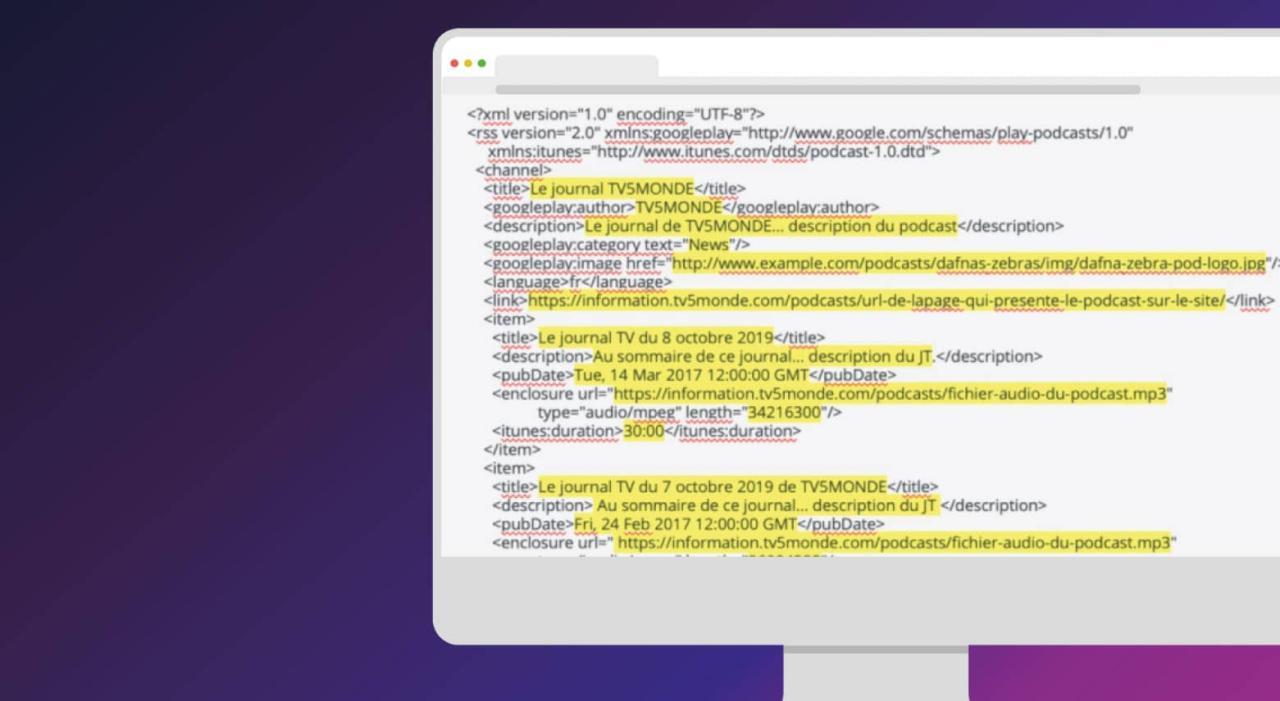
RSS feeds use Extensible Markup Language (XML) to structure data. This structured format allows podcast platforms to easily parse and display the information about each episode. Key elements within the XML structure include the podcast title, description, author, and links to the episode files. The XML format provides a standardized way for podcast platforms to interpret and display the data, ensuring consistency and compatibility across different podcasting applications.
This structured data enables the smooth delivery of episode information, making it easily accessible to listeners.
Advantages of Using RSS Feeds
Using RSS feeds provides several benefits for both podcasters and listeners. One significant advantage is the automated distribution of content to various podcast platforms. This eliminates the need for manual updates on multiple platforms. Another benefit is the ease of subscribing to podcasts. Listeners can easily add podcasts to their preferred podcast applications using the RSS feed.
This allows them to receive updates on new episodes in a timely manner, ensuring a seamless listening experience.
Types of RSS Feeds and Their Functionalities
While there are different versions of RSS, the primary type used for podcasting is RSS 2.0. This version is widely supported by podcasting platforms and applications, enabling consistent and reliable distribution. It allows podcasters to provide information about their podcasts and episodes in a structured way. The structured data in the RSS 2.0 feed allows podcast platforms to easily access and display information about podcast episodes, such as titles, descriptions, and links to download the episode.
Optimizing Your Podcast RSS Feed for Discoverability
Podcast RSS feeds are crucial for discoverability, acting as a digital roadmap for podcasting platforms and search engines. A well-optimized feed ensures your podcast is readily found by potential listeners, increasing visibility and ultimately driving audience growth. Proper optimization involves understanding the structure and content of your RSS feed, and how these elements contribute to its discoverability.The structure of your RSS feed, meticulously crafted, acts as a crucial component for podcast discoverability.
It provides essential metadata that helps search engines and podcast directories accurately index and present your podcast to potential listeners. This ensures that listeners can easily locate your podcast through relevant s and categories. Furthermore, an optimized RSS feed enhances the user experience, ensuring a smooth and efficient interaction with your podcast content.
Role of RSS Feeds in Podcast Discoverability
RSS feeds are fundamental to podcast discoverability. They act as a digital catalog, providing metadata about your podcast to platforms and search engines. This metadata, including the podcast title, description, and episodes, helps search engines understand the content and topic of your podcast. The more accurate and comprehensive the metadata, the higher the chances of your podcast appearing in relevant searches and recommendations.
This translates to more visibility and potential listeners.
Best Practices for Optimizing the RSS Feed for Searchability
Optimizing your RSS feed for searchability involves several key practices. Use relevant s in your podcast title and description. These s should accurately reflect the content of your podcast. Ensure your podcast description is concise, compelling, and informative. It should entice listeners to explore your podcast.
Also, utilize descriptive categories and tags to enhance searchability and organization. Categorizing and tagging your podcast episodes allows listeners to easily filter content based on specific topics.
Improving User Experience with the RSS Feed
A well-structured RSS feed improves the user experience for both listeners and podcasting platforms. Clear and concise episode titles are essential for understanding the content at a glance. Use descriptive summaries for each episode to entice listeners to listen. A well-formatted RSS feed is crucial for readability. This includes consistent formatting, proper use of metadata, and accurate structuring of episode data.
Impact of Proper Formatting on Feed Readability
Proper formatting directly impacts the readability and usability of your RSS feed. Consistent formatting, including consistent capitalization, spacing, and punctuation, enhances the feed’s readability and ensures that data is interpreted correctly by podcasting platforms and search engines. This consistency improves the user experience, enabling listeners to quickly and easily grasp the podcast’s content and episodes. A well-structured feed is also more likely to be parsed correctly, preventing errors or issues with display on various platforms.
Tools and Techniques for Analyzing RSS Feed Performance
Analyzing RSS feed performance is crucial for identifying areas for improvement. Tools like Feedvalidator and Feedly can help identify any errors or inconsistencies in your RSS feed. Use these tools to check for compliance with RSS specifications. Monitoring podcast directory listings can also provide valuable insight into how your podcast is being presented to listeners. Regularly reviewing your feed’s performance helps to identify areas that can be optimized to maximize discoverability and listener engagement.
Alternative Methods for Distributing Podcast Content
Expanding your podcast’s reach beyond your RSS feed is crucial for growth. Various methods, from dedicated websites to social media platforms, offer unique opportunities to engage with your audience and promote your episodes. Understanding the strengths and weaknesses of each channel allows you to strategically integrate them into your overall podcasting strategy.
Comparing Distribution Channels
Different platforms cater to diverse audience segments and provide various tools to support podcast promotion. By understanding the strengths and limitations of each channel, podcasters can maximize their impact.
- Podcast Website: A dedicated website acts as a central hub for your podcast, providing a comprehensive overview of your show, episodes, and other relevant information. It allows for a deeper dive into your content and fosters a stronger connection with your audience through detailed descriptions and engaging content.
- Social Media Platforms: Social media, including platforms like Twitter, Instagram, and Facebook, offer powerful tools for sharing updates, previews, and engaging with listeners. Their ability to quickly disseminate information and foster community interaction can drive significant traffic to your podcast.
- Email Marketing: Email lists allow for direct communication with your audience, fostering a sense of community and encouraging repeat listens. By delivering updates and exclusive content directly to subscribers, you can nurture engagement and build a dedicated following.
Pros and Cons of Each Method
Careful consideration of the advantages and disadvantages of each distribution method is essential for effective podcast promotion.
| Distribution Method | Advantages | Disadvantages |
|---|---|---|
| Podcast Website | Centralized hub for all podcast information; allows for detailed descriptions and exclusive content; facilitates deeper engagement with listeners; greater control over branding and presentation. | Requires significant effort to maintain and update; can be challenging to drive initial traffic; potentially limited reach if not actively promoted elsewhere. |
| Social Media | Wide reach; ability to quickly share updates and previews; promotes community interaction; cost-effective promotional tools. | Reliance on algorithms; can be time-consuming to manage across multiple platforms; risk of information getting lost in the noise; limited control over branding. |
| Email Marketing | Direct communication with subscribers; fosters community engagement; ability to deliver exclusive content; can nurture listeners into repeat listeners. | Requires building an email list; can be challenging to maintain engagement if not providing value; risk of subscribers unsubscribing if not providing relevant content. |
Integrating with the RSS Feed
The RSS feed remains the core of your podcast distribution, providing a standardized format for discovery and playback across various platforms. To leverage alternative distribution channels effectively, you need to seamlessly integrate them with your RSS feed.
- Podcast Website: Include an RSS feed link prominently on your website, enabling easy access for listeners. Clearly link each episode page to its corresponding RSS feed entry.
- Social Media: Share links to your podcast’s RSS feed in your social media posts. Highlight new episodes and provide links to download directly from the feed.
- Email Marketing: Include a link to your podcast’s RSS feed in your email newsletters. Use clear calls to action, such as “Subscribe to our podcast” or “Listen now.” Consider offering exclusive content or behind-the-scenes information to encourage subscriptions through the feed.
Including RSS Links in Different Channels
Ensuring consistent and accessible RSS links across various platforms is crucial for maximizing discoverability.
- Podcast Website: Place a clear and visible RSS feed link in the podcast’s footer or navigation menu.
- Social Media: Use clear and concise calls to action to direct listeners to the podcast’s RSS feed. For example, include the link in tweets, Instagram posts, and Facebook updates.
- Email Marketing: Integrate the RSS feed link into the email newsletter’s footer or include it as a prominent button within the email body.
Understanding Podcast Feed Readers

Podcast feed readers are essential tools for podcast listeners. They act as central hubs for managing subscriptions, discovering new content, and keeping track of episodes. These applications aggregate podcast feeds, presenting a streamlined way to access and listen to a vast array of podcasts.Feed readers offer a crucial function in the podcasting ecosystem by providing an organized way for listeners to consume podcasts.
They make the task of staying current with their favorite shows and discovering new podcasts much simpler and more efficient.
Podcast Feed Reader Functionality
Podcast feed readers are applications that download and display podcast RSS feeds. They aggregate all the episodes from subscribed podcasts into a single location, allowing listeners to browse, listen, and manage their subscriptions conveniently. This functionality streamlines the podcast listening experience by eliminating the need to visit multiple podcast websites. Feed readers handle the task of retrieving and displaying new episodes automatically.
Popular Podcast Feed Readers and Their Features
Numerous feed readers are available, catering to different needs and preferences. Some popular options include Pocket Casts, Overcast, and Castro.
- Pocket Casts: Known for its intuitive interface, Pocket Casts offers features such as advanced playback controls, sleep timers, and seamless integration with other services. It provides a comprehensive experience for managing podcasts and listening to them.
- Overcast: Overcast excels in its clean and minimalist design. Users appreciate its focus on a simple yet effective interface for managing and listening to podcasts. Key features include intuitive controls for playback, and an emphasis on a high-quality listening experience.
- Castro: Castro is a powerful feed reader, emphasizing organization and efficient podcast management. Its features include smart playlists, powerful search tools, and a clean interface.
- Other notable options include Podcast Addict, BeyondPod, and many more, each with unique strengths in podcast organization and listening experience. These applications often offer specialized features for different listening styles.
User Interaction with RSS Feeds through Feed Readers
Users interact with podcast RSS feeds through feed readers by subscribing to podcasts. Once subscribed, the feed reader automatically fetches new episodes and displays them within the application. Users can then listen to, download, or mark episodes as listened to directly within the reader.
Benefits of Using Podcast Feed Readers
Podcast feed readers offer numerous advantages to listeners.
- Centralized Management: They consolidate all subscribed podcasts into a single interface, streamlining the listening experience.
- Automated Updates: Feed readers automatically download new episodes, keeping users updated without manually checking each podcast website.
- Enhanced Discoverability: Users can easily discover new podcasts through recommendations or search functionality within the reader.
- Organized Subscriptions: Feed readers allow for effective organization of podcast subscriptions, helping users manage a large number of podcasts efficiently.
Maintaining Subscriptions with Feed Readers
Feed readers play a crucial role in maintaining subscriptions. By automating the download and display of new episodes, they ensure users don’t miss any new content. This automated update feature is essential for those who listen to podcasts regularly. Furthermore, the ability to organize and categorize podcasts within the feed reader simplifies the process of finding and listening to desired content.
Creating a Comprehensive Guide to RSS Feeds for Podcasters

A podcast’s RSS feed is its digital roadmap, guiding listeners to new episodes and ensuring consistent engagement. Properly configured, it facilitates seamless discovery and subscription across various podcast platforms. This guide details the essential steps for setting up and maintaining a robust podcast RSS feed, ensuring your audience remains connected to your content.A well-managed RSS feed is crucial for podcast success.
It acts as a central hub for all your podcast episodes, allowing listeners to subscribe and receive updates. Effective maintenance guarantees that listeners never miss an episode, enhancing your podcast’s visibility and audience reach.
Setting Up Your Podcast RSS Feed
This section Artikels the step-by-step process of creating a functional RSS feed for your podcast. It details the technical configurations and ensures your feed is readily accessible to podcast aggregators and listeners.
- Choose a Podcast Hosting Platform: Select a hosting platform that supports RSS feed generation. Many platforms, like Libsyn, Buzzsprout, and others, automatically generate and manage your RSS feed. This often streamlines the setup process significantly.
- Configure Feed Settings: Within your chosen hosting platform, navigate to the podcast settings and locate the RSS feed configuration options. These options typically allow customization of feed title, description, and other metadata relevant to your podcast.
- Ensure Episode Files are Available: Your hosting platform should allow you to upload your podcast audio files. These files are fundamental to the podcast experience and should be readily accessible for download.
- Verify Your Feed URL: Once configured, verify the generated RSS feed URL. This is essential to ensure the correct URL is being used by podcast directories. A simple check is to open the feed in a web browser. The correct format should be apparent.
- Implement Metadata: Metadata (title, description, s) is critical for podcast discovery. Ensure you provide comprehensive and accurate metadata that accurately reflects your podcast content.
Flowchart of RSS Feed Creation and Management
The following flowchart illustrates the process of creating and managing an RSS feed, from initial setup to ongoing maintenance.  (Note: A visual flowchart would be included here, but cannot be generated by the text-based AI.)
Creating a User-Friendly Guide
A well-structured, step-by-step guide can assist podcasters with navigating the RSS feed setup process. Each step should be clearly explained with simple language and actionable instructions.
- Step-by-Step Instructions: Clearly define each step involved in the setup process, from choosing a hosting platform to configuring the feed settings.
- Visual Aids: Use diagrams, screenshots, and other visual aids to illustrate the steps in the setup process.
- Clear Language: Avoid technical jargon and use straightforward language that is easily understood by podcasters with varying levels of technical expertise.
- Example Scenarios: Provide examples of common problems and their solutions to guide users through the process more effectively.
RSS Feed Maintenance Checklist
Regular maintenance is vital for maintaining an active and up-to-date podcast feed. This checklist ensures all necessary steps are consistently followed.
- Regular Feed Updates: Ensure the feed is updated whenever new episodes are released to keep the information current.
- Metadata Review: Regularly review and update metadata to ensure accuracy and relevance.
- Error Checking: Regularly check for errors or issues with the feed to ensure smooth functioning.
- Backup and Restore: Regularly back up your feed data and ensure you have a restore mechanism in place in case of unexpected issues.
Best Practices for RSS Feed Maintenance
Maintaining a functional RSS feed involves adhering to best practices that maximize its effectiveness.
- Regular Backups: Regularly back up your feed data to prevent data loss.
- Error Handling: Implement error handling mechanisms to identify and resolve any issues with the feed.
- Consistent Updates: Ensure that the feed is updated with new episodes regularly.
- Metadata Accuracy: Maintain accurate and up-to-date metadata to improve search engine optimization.
Examples of Excellent Podcast RSS Feeds

Podcast RSS feeds play a crucial role in podcast discoverability. A well-structured feed, rich in metadata, not only helps podcast platforms index and categorize your show effectively but also empowers listeners to easily find and subscribe. This section will highlight several examples of podcasts with exceptional RSS feeds, analyzing their structure and metadata to understand the elements that contribute to their success.Excellent podcast RSS feeds share common characteristics that contribute to a positive user experience.
These include accurate and comprehensive metadata, ensuring listeners receive relevant information about the podcast’s content, format, and topics. A clean and well-organized structure within the feed enhances usability and accessibility, allowing listeners to quickly find and subscribe to the desired content.
Analysis of Metadata and Structure
Effective podcast RSS feeds meticulously detail crucial information about the podcast. This includes a compelling title, a concise description, and relevant categories. Furthermore, accurate podcast artwork, a captivating summary, and a well-defined podcast feed structure are crucial components for listener engagement and discovery. This ensures listeners can quickly grasp the essence of the podcast.
Examples of Well-Structured Feeds
Several podcasts demonstrate exemplary RSS feed structure and metadata. For instance, “The Joe Rogan Experience” consistently utilizes rich metadata, including detailed descriptions, specific episode titles, and comprehensive episode summaries. This comprehensive approach ensures listeners can easily grasp the essence of each episode and determine if it aligns with their interests. Another notable example is “The Tim Ferriss Show,” which features engaging summaries and informative descriptions, making it straightforward for listeners to identify podcasts that resonate with them.
Comparison of Different Approaches
Different podcasts employ varied approaches to structuring their RSS feeds. Some focus on comprehensive episode summaries, while others prioritize concise descriptions. The key is to provide enough detail without overwhelming potential listeners. This diversity reflects the evolving podcast landscape and the unique needs of various podcast communities.
Effectiveness and User-Friendliness
The effectiveness of a podcast RSS feed hinges on several key factors. Accuracy and completeness of metadata, clarity of episode descriptions, and consistent formatting are essential for user-friendliness. Podcasters should strive to create engaging and informative episode descriptions that highlight the podcast’s value proposition, encouraging listeners to subscribe. User-friendly feeds also maintain consistent formatting and structure, making it easy for listeners to navigate and discover new episodes.
Key Characteristics of User-Friendly Feeds
Podcast RSS feeds should prioritize user-friendliness. Accurate and comprehensive metadata is vital, allowing listeners to quickly grasp the essence of each episode. Clear and concise descriptions, high-quality artwork, and consistent formatting enhance the overall user experience. These factors ultimately lead to increased listener engagement and podcast discoverability.
Ending Remarks
In conclusion, setting up a correct podcast RSS feed is vital for success. This guide has provided a thorough exploration of the topic, from the basics of RSS feeds to advanced strategies for optimizing discoverability. By implementing the best practices Artikeld, you’ll enhance your podcast’s reach and provide a superior listening experience for your audience. Remember to maintain your feed and monitor its performance for optimal results.